
BAS Members Mary Kokoszka and Marylou McDonald in Houston
From the Baltimore Appliqué Society newsletter, 2025
From October 8 to 12, the international quilting community gathered in Houston, Texas for one of the world’s largest quilt shows. Among the thousands of passionate attendees were two proud representatives of the Baltimore Appliqué Society (BAS): Vice President Mary Kokoszka and long-time member Marylou McDonald.
With over 1,000 quilts on display, the 2025 show was a feast for the eyes and a true celebration of the art of quilting. The sheer number and quality of entries made it nearly impossible to pick a favorite, as each piece reflected the creativity and dedication of its maker.
A Special Meeting with International Importance
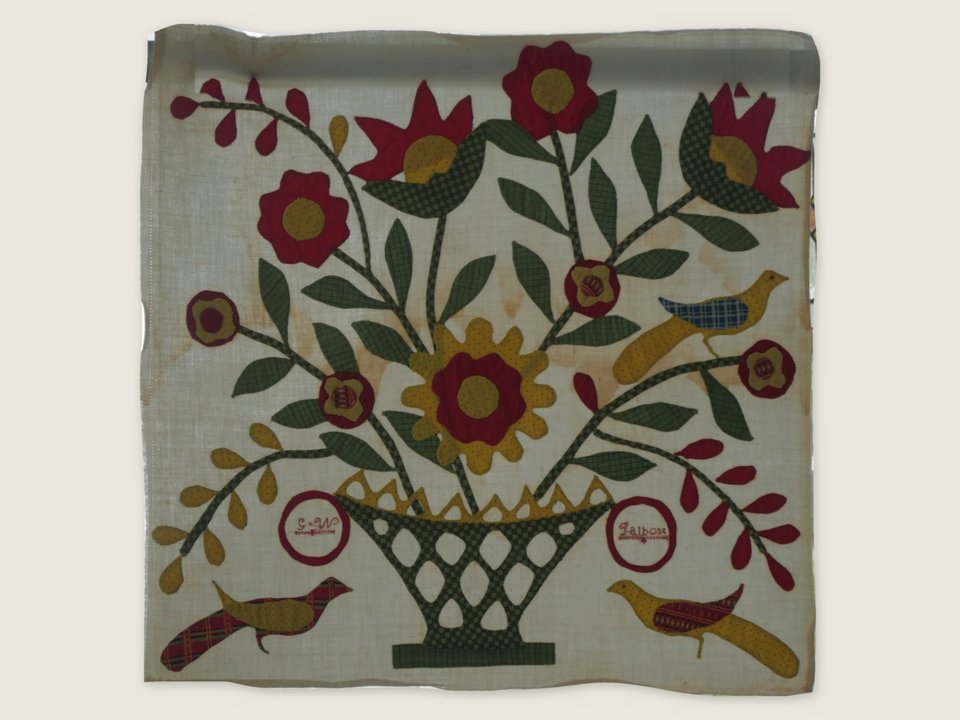
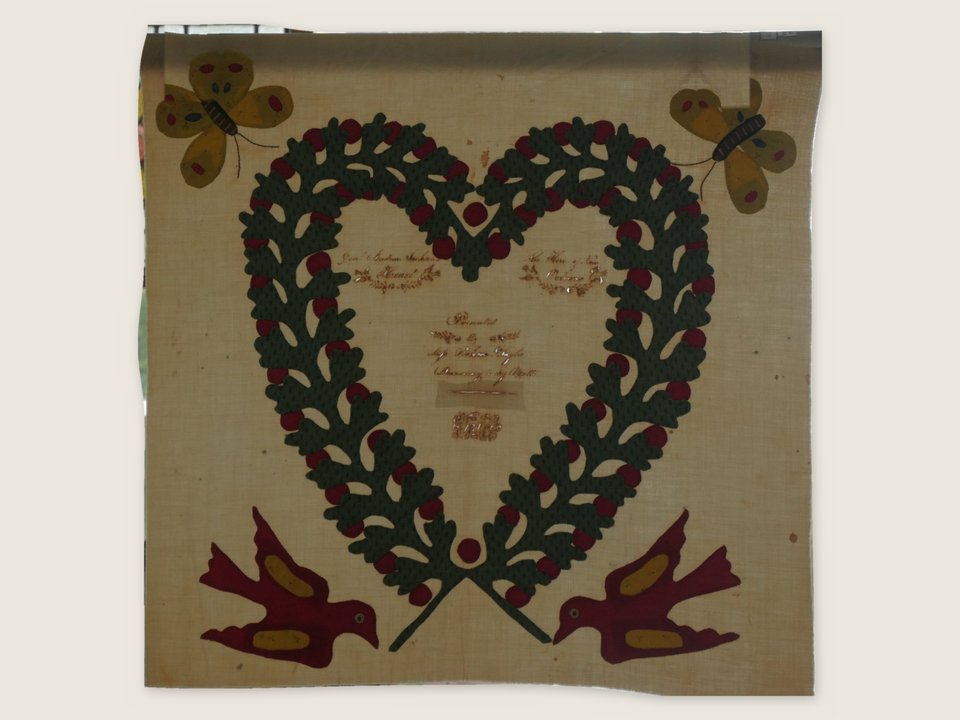
A highlight of the event was the meeting between Marylou McDonald and Kate Hebert, curator of the American Museum in Bath, England. The two connected over a shared passion for quilt history and preservation. In an inspiring act of generosity, Marylou donated her collection of 27 Antique Baltimore Album quilt blocks to the museum.
These remarkable blocks, dating back to 1846, originated from two different quilts. Their intricate designs and historical significance make them valuable additions to the museum’s collection, where they will be preserved and appreciated by an international audience. The donation not only celebrates Baltimore’s unique quilting heritage but also strengthens the global ties between quilt artists and historians.
The Baltimore Appliqué Society is proud of its members’ contributions and continued efforts to keep the traditions of appliqué and quilt making alive, both locally and around the world.
The newsletter article also included a photograph of Mary Kokoszka, Marylou McDonald and Kate Hebert together at the Houston show.
The 27 blocks came from two antique quilts: 13 Mary McDowell Hays blocks from 1847 and 14 blocks including the 1846 Andrew Jackson block. Marylou had already researched both sets and turned them into patterns. She talks about each set in her recordings.
Bath was a place she knew well. She documented quilts at the American Museum there and made a book for the museum comparing its Alice Ryder quilt with similar blocks.